Which skincare product caused my skin reaction?
Start with what changed: the products you began, switched or used more often in the days and weeks before the redness, itching or bumps appeared. Write those dates down and take them to a dermatologist, who can test for the cause if it keeps happening. A guess based on the last product you used is often wrong.
Start with what changed, not what you used last
An allergic skin reaction does not always show up the same evening. The American Academy of Dermatology explains that skin allergies tend to develop in hours or days, so a serum you started a week ago can still be the trigger, and the cream you used this morning can be innocent. Irritation is a different thing: some ingredients, such as retinol and glycolic acid, can irritate the skin without you being allergic to them.
Before anything else, write down:
- the day the reaction started and where on your skin it is
- every product that touched that area in the weeks before: cleanser, serum, moisturizer, sunscreen, makeup, and things that are not skincare at all, such as a new hair product or a new razor
- which of them were new, a new formula of an old favorite, or used more often than usual
- what you have already stopped or changed since
A worked example: three changes in two weeks
Say your cheeks turned red and itchy on Friday 14 March. Looking back, you find:
- Monday 3 March: started a new vitamin C serum.
- Saturday 8 March: opened a new bottle of your usual moisturizer.
- Wednesday 12 March: switched to a new sunscreen.
The sunscreen is the most recent change, so it feels like the obvious suspect. But the serum had been on your skin for eleven days by then, and an allergic reaction can take time to appear. The dates alone cannot settle it. What they do is turn a vague "something in my routine" into a short, dated list, with the two genuinely new products at the top, which is exactly what a dermatologist will ask for.
How patch testing narrows it down
There are two kinds of test, and they answer different questions.
Testing a new product at home, before you use it. The AAD suggests applying the product to a quarter-sized test spot where it will not be rubbed or washed off, twice a day for seven to 10 days, and using it on your face only if no redness, itching or swelling appears. If a reaction does appear, the AAD's advice is to wash the product off and not use it again.
Patch testing at a dermatologist. When rashes keep coming back, a dermatologist may suggest patch testing: small amounts of possible allergens stay on your skin under patches for 48 hours, and you return a few days later because reactions can take time to develop. This can point to an ingredient, which neither a home test nor a log can do.
Common mistakes when hunting for the cause
- Starting several new products in the same week. Two new products give you two suspects and no way to separate them; dermatologists advise one new product at a time.
- Blaming the last thing you used. As above, allergic reactions can lag behind the product that caused them.
- Putting the suspect back on to check. Ask a dermatologist before you test anything you think caused a reaction.
- Trusting gentle-sounding labels. The AAD says to stay cautious even with products labeled "unscented" or made with plant-based ingredients.
- Relying on memory weeks later. By the time you see a dermatologist, "I think I started it around the 3rd" is a weak answer. A dated record is better.
Keep a dated record in EasyRoutine
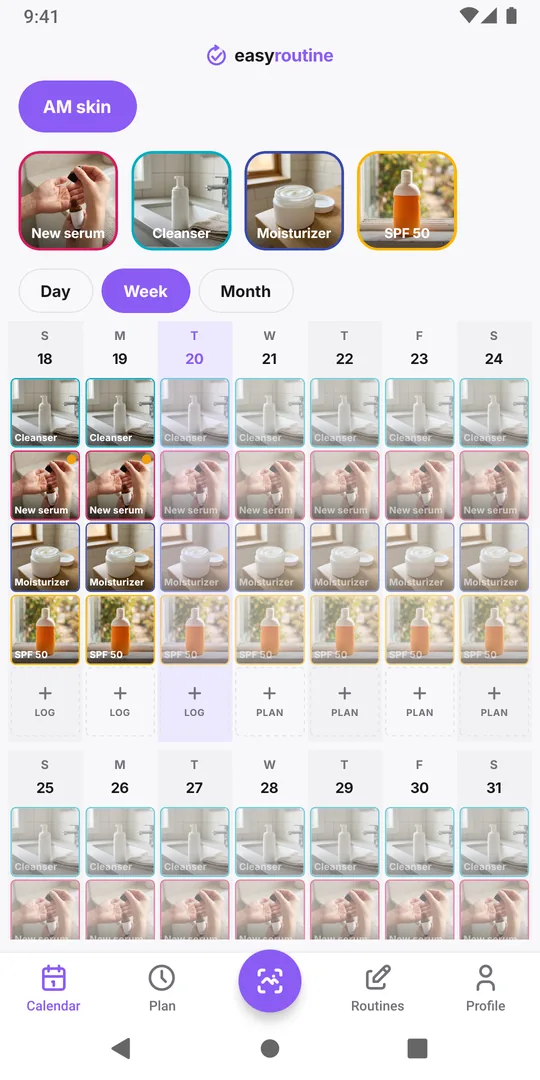
EasyRoutine is a free way to keep that record. Make each product its own activity in a routine, for example Cleanser, Moisturizer, SPF 50 and New serum, rather than one "Morning routine done" entry, which cannot show which product was on your skin on which day. Each evening, tap + Log on the day and tick the products you used in one go, or add them later on the right date if you forgot.
The note that matters most is the one on a product's first day: "First use, new vitamin C serum". After that, use the green, amber or red flag for how your skin looked, and a word or two when something changes, like "cheeks a bit red". If you give each bottle a photo, you can also log it by pointing the camera at it in the Scan tab. How it all works.
Read back the timeline, before you archive anything
When a reaction starts:
- Tap the new product's tile above the calendar. The calendar then shows only that product, so its first entry is the day you started it.
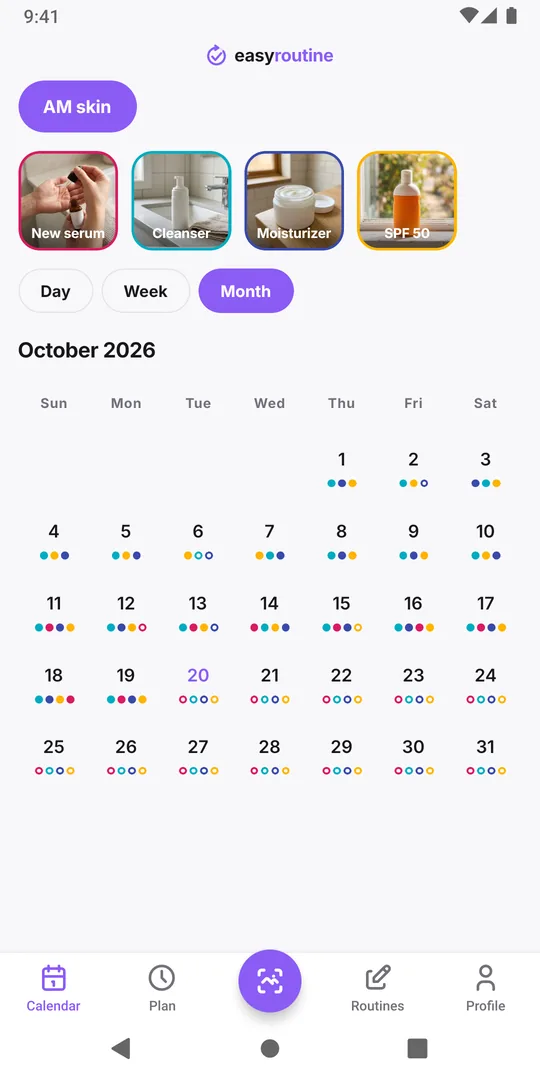
- Switch to the month view to see when that color first appeared and how it lines up with the days you flagged amber or red.
- Open a log from the day the reaction began. The log sheet shows only the last 5 comments for that product, so after five later notes your first-use note is no longer among them. In that case, open the product's first entry from step 1 to read it.
Do this before you archive a product you have stopped. Archived activities keep their logs on the calendar, but their tile disappears, so you can no longer filter by them. If you already archived it, unarchive it for a moment, read the dates, and archive it again.
What the app does not do
EasyRoutine is a log, not a diagnosis. It does not analyse ingredients, compare products or tell you which one caused a reaction, and a reaction can have causes that are not in your skincare at all. It only shows what you logged and when, which is the part you would otherwise have to remember.
For a product you are trying for a set number of weeks on purpose, the skincare treatment tracking template shows how to give it a start and an end date.
Common questions
What should I bring to a dermatologist appointment about a reaction?
The products themselves or clear photos of their ingredient lists, the dates you started and stopped each one, and photos of the reaction taken with your phone camera on the worst days. EasyRoutine does not store photos of your skin, so keep those in your photo library.
Can I add products I started before I began logging?
Yes. Logs can be back-dated to any day since 1 January 2020. Add one on the day you remember starting the product and write "approximate date" in the note so you know how far to trust it.
Should I track how my skin looks as its own activity?
It can help. A separate activity such as Skin check, logged once a day with a flag and a short note, gives you a rating even on days you skipped products, so a calm stretch after you stopped something is visible too.
Do I need Premium to track a reaction?
No. Keeping the record is free. Premium adds schedules and reminders, which make missed days easier to spot but are not needed for the record.
Keep reading
Free on iPhone and Android. Sign in with Apple, Google or your email to start.