A chicken coop cleaning schedule for daily, weekly and seasonal jobs
Split coop care into three lists: a short daily round, a few weekly jobs each on its own weekday, and the seasonal work (deep clean, worming, mite treatment) as dated plans. EasyRoutine logs each job for free so you can see when it was last done, and with Premium it reminds you on the planned day.
Why you need a chicken coop cleaning schedule
The daily jobs rarely get forgotten: the hens are loud about food and water. It is everything else that drifts. The bedding change slides to next weekend, the oyster shell runs out without anyone noticing, and when someone asks when the flock was last wormed, the honest answer is "spring, maybe".
It gets worse when several people share the flock. Everyone assumes someone else scrubbed the waterer. A written cleaning schedule with a log behind it settles that.
Daily chicken coop cleaning checklist: water, poop board and eggs
The daily round takes a few minutes:
- Fresh water. The RSPCA advice on keeping chickens says chickens need constant access to clean, fresh water. Check it has not frozen on cold mornings.
- Feed. Top up the feeder and look at how much is left from yesterday.
- Poop board. If you have a board or tray under the roost, scrape it every morning. It keeps the bedding below dry for longer.
- Eggs. Collect them and glance at the nest boxes. A dirty nest box is the first sign the bedding needs attention.
- A quick look at the hens. The same RSPCA page says to check them regularly and calmly for signs of discomfort or injury.
Weekly chicken coop cleaning tasks: bedding, waterer and supplements
Give each weekly job its own weekday, so nothing piles up on Saturday:
- Bedding change (Saturday). Remove wet and soiled bedding and add fresh. The RSPCA says to top up or replace the substrate when needed and to keep plenty of dry, clean litter.
- Scrub the waterer and feeder (Wednesday). The RSPCA reminds keepers to clean food dispensers and drinkers regularly.
- Oyster shell (Sunday). The RSPCA describes oyster shell as a soluble grit that adds calcium.
- Grit (Thursday). Chickens have no teeth, so they also need insoluble grit such as flint grit (same RSPCA page).
- Apple cider vinegar (Monday). Some keepers add it to the water. If you do, follow the product label and keep it on a fixed day so nobody doubles it.
Write down in one line what "bedding change" means in your coop: the whole floor, or only the soiled patches and nest boxes.
How often should you change chicken bedding in winter?
There is no fixed number of days. Bedding is due when it is wet, caked or smells of ammonia. In winter, hens spend more hours inside, so bedding may need changing sooner. Check the floor under the roost and around the waterer on your weekly bedding day, and change it earlier if it is damp. For a winter routine specific to your coop and climate, ask your vet or an experienced local poultry keeper.
The deep litter method: how it changes your cleaning schedule
With deep litter, you do not clear the floor every week. You start with a thick layer of dry bedding such as wood shavings, turn it now and then, and add fresh material on top as it gets dirty. The full clear-out happens a few times a year instead of every week.
It only works if the litter stays dry. A wet patch under the waterer or a leaking roof turns deep litter into a damp, smelly mat, so the weekly job becomes "turn and check the litter" rather than "change the bedding".
Seasonal chicken coop maintenance: deep cleaning, worming and mites
These jobs come round every few months, which is exactly why nobody remembers the last date:
- Deep clean. The RSPCA says coops need to be cleaned and disinfected regularly to remove parasites. Empty the coop, scrub perches and nest boxes, let it dry, then re-bed.
- Mite checks and treatment. Red mites and lice are more common in summer, according to the RSPCA. Check the ends of perches and the corners of nest boxes. If you find mites or lice, follow your vet's advice and the product label for treatment.
- Worming. The RSPCA says chickens need regular worming, particularly if they stay on the same outdoor area for more than a month. How often, and which product to use, depends on your flock and ground, so follow your vet's advice and the product label.
- Vaccinations. Whether your hens need any depends on where they came from and where you live. Ask your vet or the breeder.
How to track your chicken coop cleaning schedule in EasyRoutine
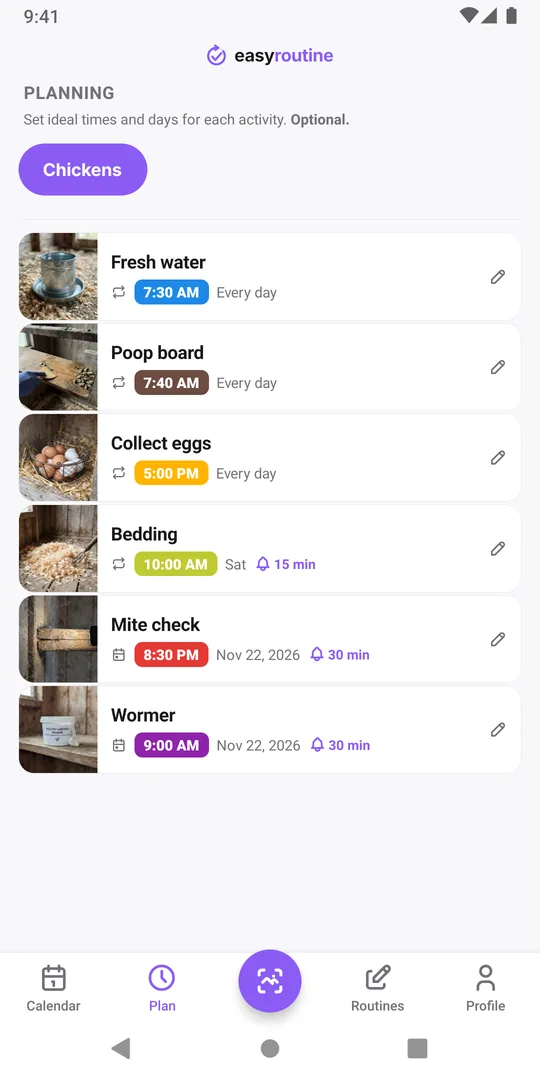
Create a routine called Chickens and add the jobs as activities: Fresh water, Poop board, Collect eggs, Bedding, Mite check and Wormer. Add the supplements and the deep clean as their own activities if you want them in the same plan. Logging is free: tap the planned entry or + Log when the job is done, and add a note such as "new bale of shavings" or "mites on perch ends". A red, amber or green flag marks the visits that need a second look.
With Premium, open the Plan tab and give the daily and weekly jobs a Recurring plan on their weekdays, with a reminder at a time you are actually at the coop. Repeating plans use weekdays, so there is no "every 3 months" setting. For worming, mite treatment and the deep clean, add Single day plans on the dates you choose, up to 20 per activity, and write the product name in the note when you log it. More in scheduling and reminders.
When was the flock last wormed? Check the month
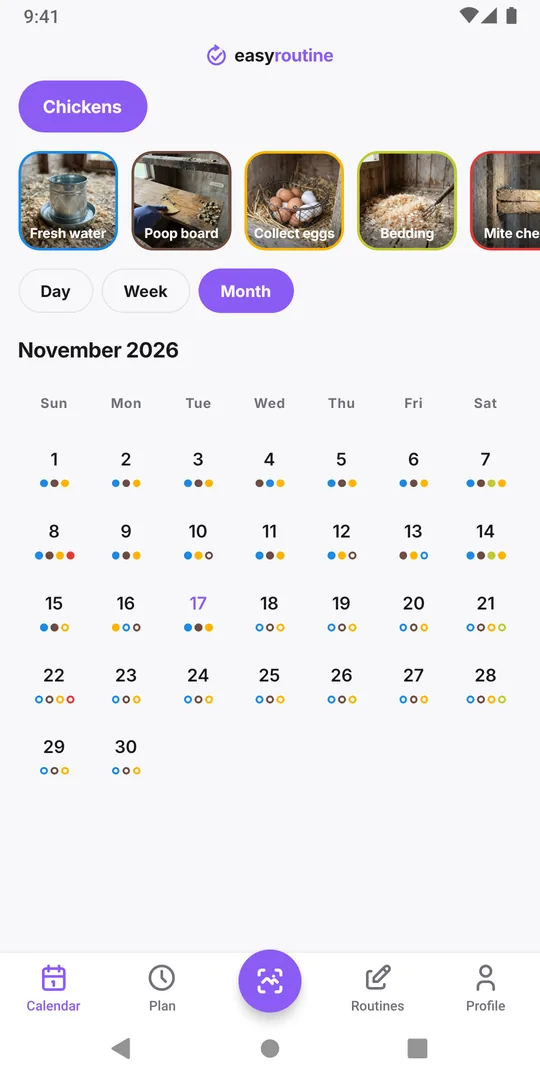
Open the Month view and tap Wormer to highlight it. Each completed worming log appears as a dot, and the note tells you which product you used. More on answering when did I last do it.
Sharing chicken coop cleaning duties with several people
If the whole household looks after the hens, sign in on every phone with the same email address. Everyone sees every log, so "did anyone do the water?" is answered by looking at today, and a note like "done by Sam" says who. Each phone gets its own reminders. Everyone signed in can also edit everything in that account, so share it only with people you trust. See how sync works.
A neighbor who keeps their own hens can get a copy of your list through a share link. It shares the routine and activity names, colors and photos, never your logs, notes or schedules. For feeding and medication rules that help prevent double doses, see the pet feeding and medication reminder.
Common questions
How often should I clean a chicken coop?
Clean the poop board, check water and collect eggs daily. Change or turn the bedding weekly, or sooner if it gets wet. Deep clean and disinfect regularly. The RSPCA recommends regular cleaning and disinfecting to remove parasites but gives no fixed interval, so set yours according to how quickly the bedding gets dirty.
How often should I change chicken bedding?
There is no universal interval. Change bedding when it becomes wet, caked or smells of ammonia. Check under the roost and around the waterer regularly, especially during winter when hens spend more time inside.
How often should I deworm chickens?
It depends on your flock, the ground and the product. The RSPCA says chickens need regular worming, especially if they stay on the same outdoor area for more than a month. Follow your vet's advice and the product label for the interval.
Can an app remind me to clean the chicken coop every three months?
EasyRoutine does not have a repeating every-three-months rule. With Premium, add single-day plans for upcoming worming or deep cleaning dates, up to 20 per activity, each with its own reminder. Logging completed jobs is free.
Can several people log cleaning jobs for the same flock?
Yes. Sign in with the same email address on each phone. Everyone sees every log and gets reminders on their own phone. Everyone signed in can also edit everything in that account.
Keep reading
Free on iPhone and Android. Sign in with Apple, Google or your email to start.