How often should you change your guitar strings?
There is no fixed interval for changing guitar strings. It depends on how much and how hard you play, your hands, where the guitar lives and the strings themselves, so follow the string maker's guidance and watch for the signs below. Keeping track of your last change makes it easier to know when the next set is due.
How do you know when guitar strings need changing?
Strings rarely fail all at once. Their sound and feel gradually change, and because you play them every day, you can get used to the difference. Look and listen for these signs:
- Dull tone. The sparkle is gone, notes die away sooner, and chords sound flat compared with a freshly strung guitar.
- They will not stay in tune. You retune at the start of every session, or chords sound slightly off higher up the neck even when the open strings are in tune.
- Discoloration. Dark patches, rust or grime appear on the strings, especially where your fingers rest most.
- A rough or sticky feel when you slide along the string.
- Visible wear. Flat spots appear under the frets or the winding starts to come apart.
One sign alone may just mean the guitar needs tuning or a wipe. Two or three together usually mean it is time for a new set. If one string breaks, decide whether to replace just that string or the whole set. A single new string next to old ones can sound noticeably brighter.
What affects how often you should change guitar strings?
A guitar played for an hour every day wears its strings far faster than one taken out on a Sunday afternoon. That is why a fixed "every month" rule fits some players and not others. These factors make the difference:
- How much you play, and how hard you strum or bend.
- Your hands. Some players go through strings faster than others.
- Where the guitar lives. A case, a stand by a window or a humid room all affect strings.
- The strings. Different materials and coatings last differently. The string maker's own guidance is the best starting point.
- What is coming up. Before a gig or recording session, fresh strings may matter more to you than during an ordinary practice week. Leave time for new strings to settle before the date.
The honest answer to "how often should I change my guitar strings?" is that it depends on how much you play and how quickly the signs above appear. The useful question is: when did I last change them?
Track guitar string changes for each instrument (free)
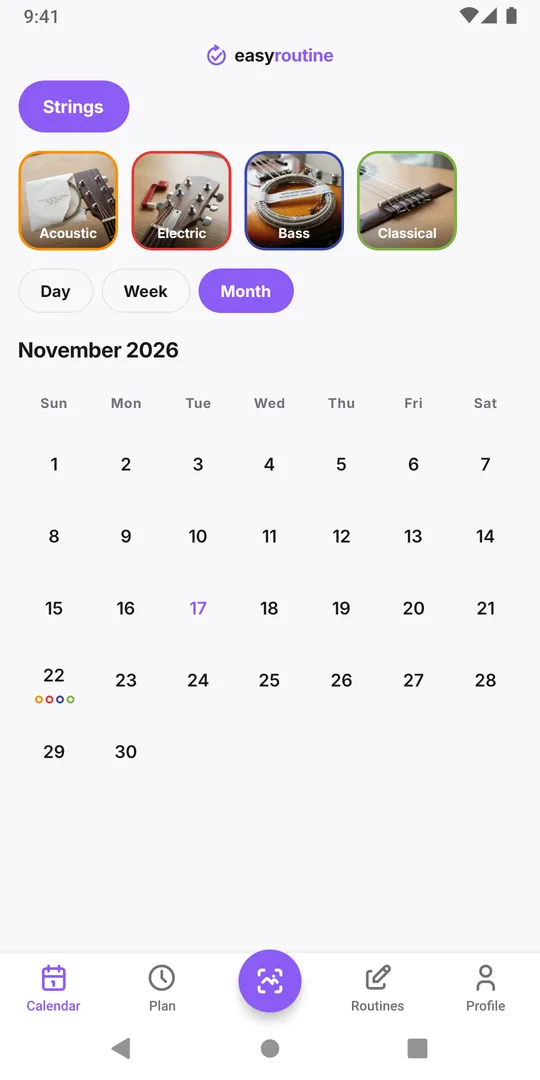
In EasyRoutine, create a routine called Strings and add one activity per instrument: Acoustic, Electric, Bass, Classical, or names like "Dreadnought" and "Strat" if that is how you think of them. Each instrument gets its own tile and color, so changes on one never mix with another.
When the new set is on, tap + Log on the day, tick the instrument and add a note with what you put on: the gauge and type, such as "light gauge, phosphor bronze" or "10 to 46, nickel wound", plus anything worth remembering, like "before the gig" or "high E broke". An amber flag can mark a set that went dull sooner than you expected. Next time you log that instrument, the log sheet shows your recent notes, so you can see which strings you used last time before buying the next set.
Open the Month view and tap the instrument's tile to highlight its dots. The latest one is your last change, and the gaps between them show your actual replacement pattern.
Compare string changes with your practice time
EasyRoutine does not count playing hours. If you keep a practice log, though, the calendar can show you roughly how much playing happened since the last change. The instrument practice log shows how to set one up. Put the practice activities in their own routine and switch between the two with the routine pills. Many practice days since the last string change, combined with fading tone, are a clear sign that a new set may be due. A quiet month with only a few sessions means the strings may have more life in them.
Plan your next guitar string change (Premium)
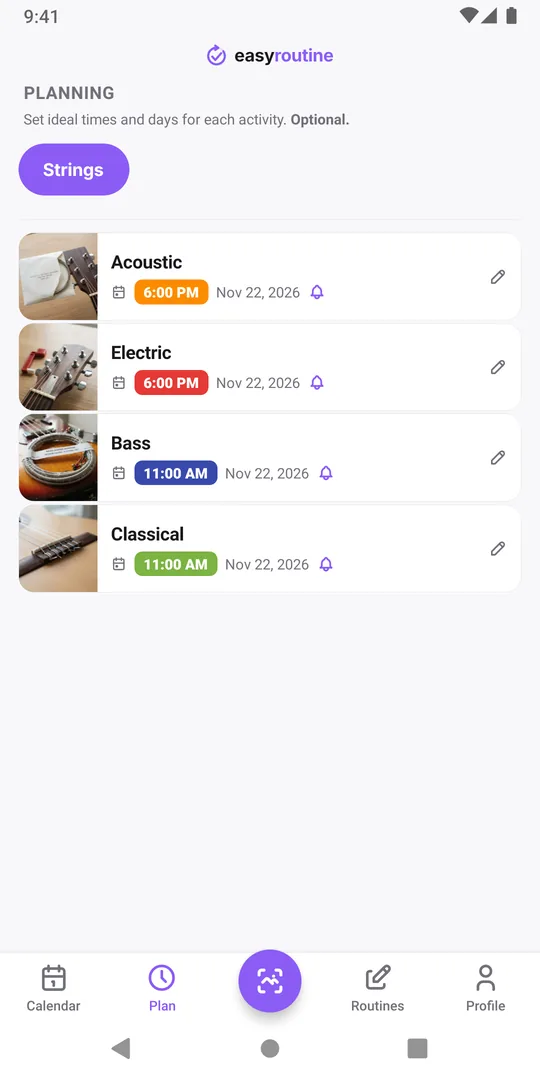
Scheduling and reminders are Premium. Repeating plans in EasyRoutine use weekdays, so there is no "every N weeks" rule. For string changes, a single-day plan is a good fit: open the Plan tab, tap the instrument and add a Single day plan on the date you expect the next change, with a reminder. One activity can hold up to 20 single-day plans, so you can plan the next change for each guitar separately, plus one before a gig.
If you change strings early because they sound dead, log the actual date and move the next plan to reflect what you did. If the date comes and the strings still sound fine, push it back. The plan is a reminder to check, not a rule. Learn more about scheduling.
Common questions
How often should I change my guitar strings?
It depends on how much you play, your hands, where the guitar is kept and the strings themselves. Follow the string maker's guidance and change them when the tone goes dull, they stop holding tune or they look discolored or worn.
Does EasyRoutine count my playing hours?
No. It records that you changed the strings and when, with a note for the type and gauge. A practice log in the same app shows how often you played since the last change.
Can I track string changes for several guitars?
Yes. Give each instrument its own activity in a Strings routine. Each guitar then has its own replacement dates, notes and, with Premium, individual plans.
Can EasyRoutine remind me to change guitar strings every few weeks?
Not with a repeating interval. Scheduling and reminders are Premium. You can add a single-day plan with a reminder for the expected next change, up to 20 dates per instrument, and move the date when you change strings earlier or later.
Keep reading
Free on iPhone and Android. Sign in with Apple, Google or your email to start.