A beehive inspection log app for every hive
A beehive inspection log tells you what you found last time, hive by hive, before you open the box again. EasyRoutine logs each inspection for free with your notes and a red, amber or green flag, and with Premium it plans inspection days, varroa checks, treatments and autumn feeding with reminders.
What to record in a beehive inspection log
Keep each inspection record short and use the same checklist every time. That makes it easier to compare one hive with another and this week's findings with last week's. A simple beehive inspection checklist:
- Hive and date. One entry per hive, never one for the whole apiary.
- Queen or eggs seen. Eggs tell you a laying queen was there in the last few days, even if you did not spot her.
- Brood. How many frames, and whether the pattern looks solid or patchy.
- Stores. Honey and pollen, and whether the colony has room to expand.
- Temperament. Calm, nervous, defensive.
- Swarm signs and anything odd. Queen cells, unusual brood, dead mites on the floor.
- What you did. Added a super, fed, started or removed a treatment.
In the UK, the GOV.UK guidance on bee pests and diseases lists signs to watch for, including a patchy and erratic brood pattern (one sign of European foulbrood) and dead varroa mites on the hive floor. It also asks beekeepers to register on BeeBase to help the National Bee Unit monitor and control pests and diseases (GOV.UK: protecting honey bees from pests and diseases). Follow the reporting steps on that page if you suspect a notifiable disease.
How often should you inspect, check for varroa and feed?
There is no single answer. It depends on your climate, your bees and the time of year. For inspection frequency, varroa monitoring and treatment, and autumn feeding, follow your local beekeeping association, mentor or regional bee inspector. Official sources provide some additional guidance:
- Scotland's SASA calls varroa management a routine and essential part of bee husbandry (SASA: varroa).
- In England and Wales, government bee inspections take place from the beginning of April to the end of September (GOV.UK: honey bee inspections).
- In the UK, when you buy a bee medicine you must record the product name, batch number, quantity, date and supplier. When you use it, record the treatment date, quantity used, hive identifier and withdrawal period. Keep these records for 5 years after the medicine is given (GOV.UK: bee medicines).
Other countries have their own rules, so check what applies where you keep bees.
Common beehive inspection log mistakes
- "All fine." It tells you nothing next week. Write what you saw: eggs, frames of brood, queen cells.
- One entry for the apiary. When one colony goes queenless, you need that hive's history, not an average.
- Treating without dates. A treatment has a start date and, according to its label, a date it comes out. Record both.
- Writing it up at home. Details fade fast. A few words at the hive beat a full page from memory.
How to keep a separate inspection log for each hive (free)
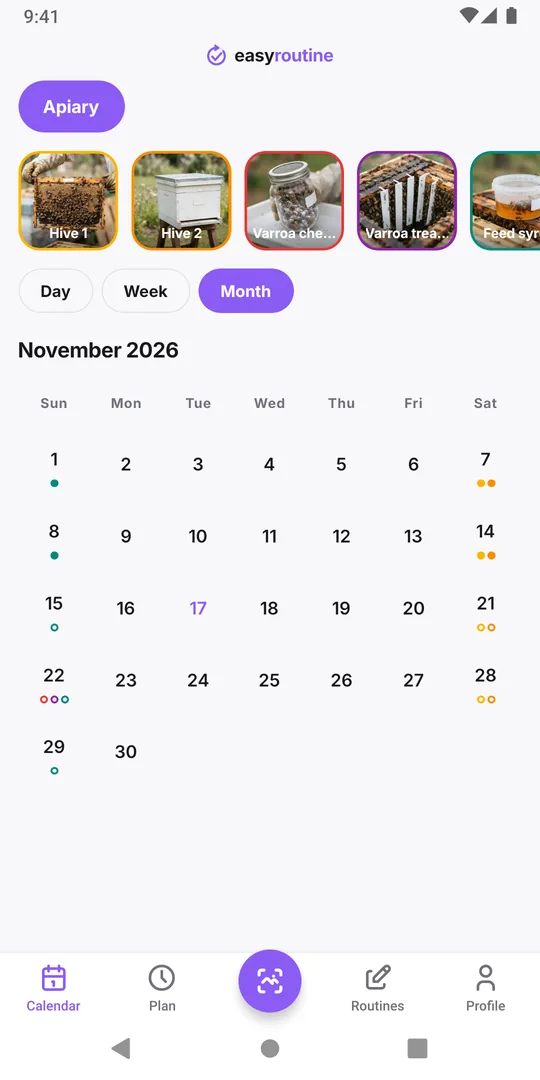
In EasyRoutine, create a routine called Apiary with one activity per hive, Hive 1 and Hive 2, plus Varroa check, Varroa treatment and Feed syrup. After an inspection, tap + Log, pick the hive and type your checklist into the note, such as "Queen seen, eggs, 6 frames brood, good stores, calm".
Then set the flag: green for a hive that is fine, amber for something to watch (light stores, a queen cell, a nervous colony), red for something that needs action soon. The next time you log that hive, the log sheet shows your last few notes for it, so you can read last week's findings before lifting the lid. Inspected on Saturday but logged on Monday? Set the log date to Saturday.
For treatments, put the product, batch number and hives in the note. The app keeps the date and time. Check whether this information meets the record rules where you live: EasyRoutine has no medicine record format or data export. How logging works.
How to schedule hive inspections and varroa treatments (Premium)
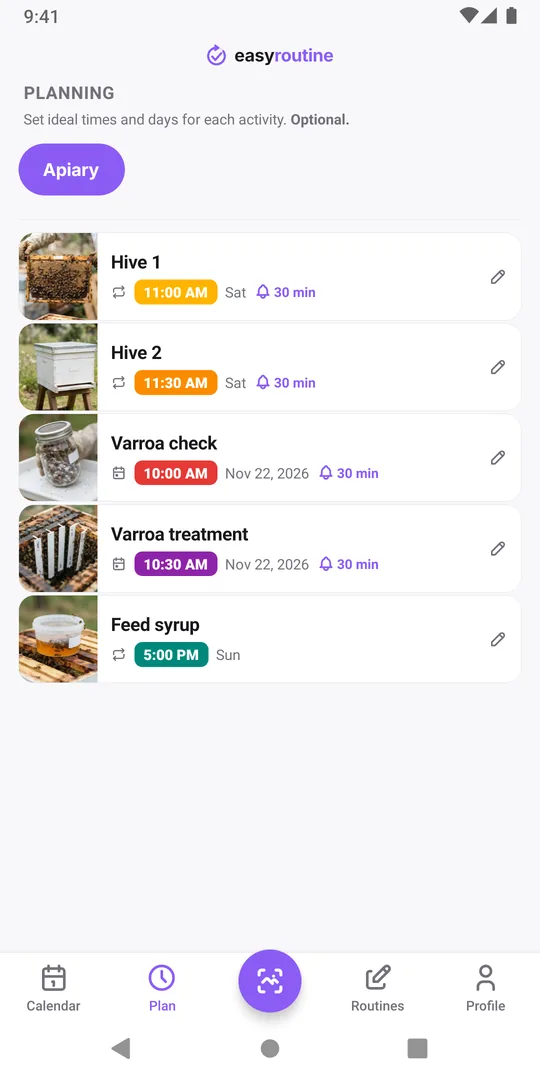
With Premium, put the inspection rhythm your association suggests into the Plan tab. A recurring schedule repeats on weekdays at a time. For example, schedule Hive 1 and Hive 2 on Saturdays at 11:00. You can also set an active period, so the schedule starts in spring and ends with your season instead of reminding you all winter.
Varroa checks, treatments and autumn feeding are dated jobs. The app has no "every 4 weeks" rule, so add them as Single day plans on the dates you choose, up to 20 per activity. For example, schedule the next mite checks, the day a treatment goes in and the day it comes out according to the product label. Autumn feeding can be a recurring weekly slot with an active period of a few weeks, or a handful of single dates. If rain cancels Saturday's inspection, log it on Sunday when you do it. An inspection you planned but did not log stays faded on the calendar. More about scheduling.
Good to know
- The app needs an internet connection, and many apiaries have poor signal. Jot notes on paper or in your phone's notes and log them later on the right day and time.
- Sharing the routine by link with a fellow beekeeper shares the hive names, colors and photos, never your notes, flags or schedules.
- A colony died or was combined? Archive its activity. The history stays and it stops showing in plans.
Other seasonal outdoor logs work the same way: see the chicken coop cleaning schedule and the pool maintenance log.
Common questions
How often should I inspect my beehive?
It depends on your climate, your bees and the season. Follow your local beekeeping association, mentor or bee inspector. Once you know your inspection rhythm, EasyRoutine Premium can schedule reminders for those weekdays during your season.
How do I keep a separate inspection log for each hive?
Create one activity per hive in an Apiary routine. Record each inspection as a log with its own notes and flag. You can filter the calendar to one hive to see its inspection history.
Can I record varroa counts in a beehive log app?
Yes. Enter the monitoring method and count as text in the log's note. EasyRoutine has no dedicated counter or chart, but your notes remain in date order.
Can I use a beehive inspection log without mobile signal?
No. EasyRoutine needs an internet connection to log. Reminders already scheduled on your device still arrive. Note your findings offline and enter them later with the correct date and time.
Is a beehive inspection log app free?
EasyRoutine's inspection logging, notes, flags and calendar are free. Inspection schedules, single-date plans and reminders require Premium.
Keep reading
Free on iPhone and Android. Sign in with Apple, Google or your email to start.