How often should I change my toothbrush head?
Replace your toothbrush or electric toothbrush head about every three to four months, or sooner if the bristles become matted or frayed, according to the American Dental Association (ADA). The challenge is remembering when you last changed it. EasyRoutine lets you log every new brush head for free and, with Premium, schedule a reminder for its next replacement date.
How often should you change a toothbrush or brush head?
The ADA recommends replacing toothbrushes approximately every three to four months, or sooner if the bristles become matted or frayed (ADA: toothbrushes). For children, the NHS recommends replacing a toothbrush every 3 months, or sooner if the bristles become damaged (NHS: looking after your child's teeth).
This guidance applies to toothbrushes in general. For an electric toothbrush, apply the same interval to the head and check your brush's manual too. It may specify a different interval. If it recommends replacing the head sooner, follow that guidance. Whatever the calendar says, check the bristles: if they are splayed, replace the head now.
The ADA also says toothbrushes should not be shared. Store them upright after use so they can air dry, rather than putting them in a closed container while wet.
Should you change your toothbrush after a cold or flu?
Many people throw away their toothbrush after being ill. However, an ADA News article for dental teams says that continuing to use the same toothbrush does not typically lead to reinfection. It identifies two exceptions: if people who were ill share a toothbrush holder, all brushes in it should be replaced to prevent the illness spreading to others; and people who are severely immunocompromised or have had a cold sore should switch to a new brush (ADA News: when to replace toothbrushes).
If you are unsure what applies to you, ask your dentist. If you replace a brush head early, log the change so the next replacement date starts from the new date.
How to remember when you changed your toothbrush head
A brush head wears slowly, so it never looks much worse than it did yesterday. Three months is also long enough to forget the replacement date. In a family, each person's brush may have a different replacement date. A few practical habits help:
- Keep spare heads in the bathroom cupboard. If a new one is within reach, you can change it on the day instead of waiting for the next order.
- Change all the family's brushes on the same day, so you have one date to remember instead of four. Replace an individual brush earlier if it frays or after an illness.
- Give each person their own color ring or handle, so nobody uses the wrong brush and you can identify each person's head.
- Write down the replacement date. The box tells you when the brush head was bought, not when you started using it.
How to track toothbrush head replacements for free
In EasyRoutine, create a routine called Teeth and add an activity for each brush: Brush head, Sam's brush head, Kids' brushes. When you install a new head, use + Log on that day and select the corresponding activity. Add a note such as "last head in the pack" or "changed early, after flu" to explain an extra replacement. An amber flag can mark a head that frayed early.
To check how old a brush head is, tap its activity tile above the calendar to highlight it. Then go back through the Month view to find its latest dot. That marks the last replacement. If you already track flossing in the same routine, the flossing reminder explains how to set up the daily activity. See how logging works for more details.
How to set a toothbrush replacement reminder (Premium)
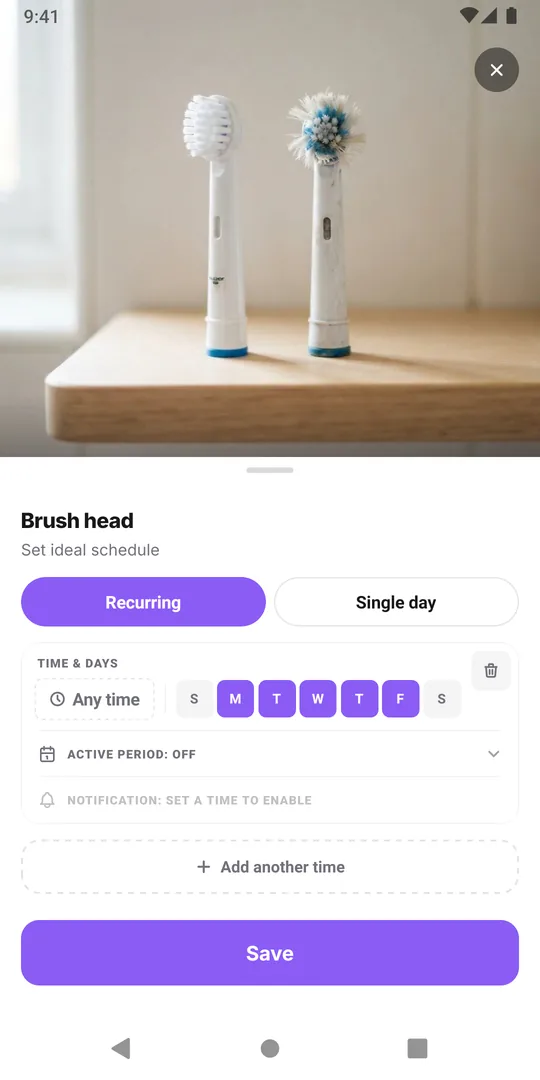
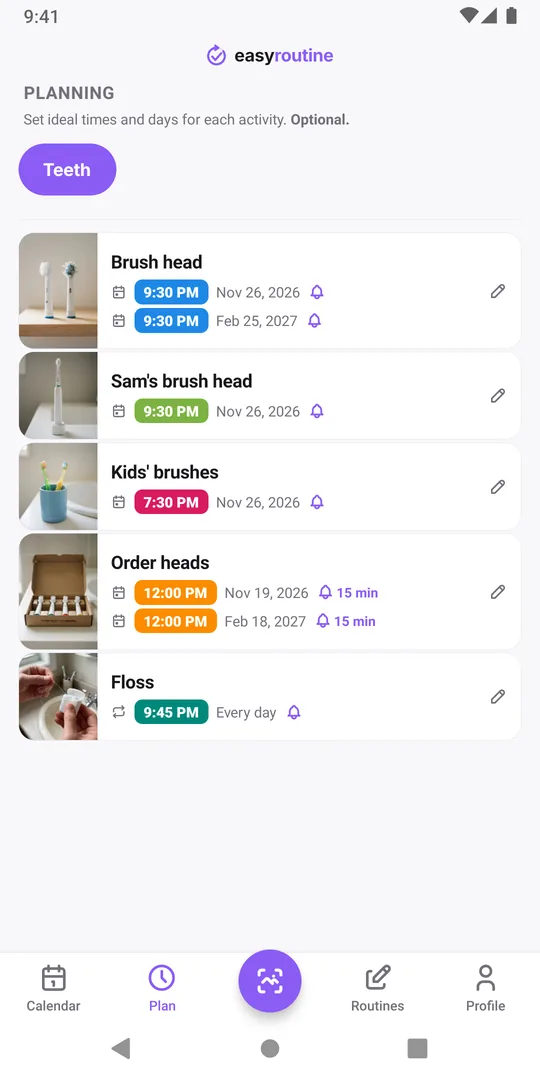
EasyRoutine's repeating plans use weekdays, so there is no built-in "every three months" rule. With Premium, open the Plan tab, tap Brush head and add Single day plans for the next replacement dates. Give each plan a time and a reminder. Choose an evening when you normally brush, such as 21:30, so you can replace the head straight away.
One activity can hold up to 20 single-day plans, enough for years of three-month replacements. Alternatively, plan only the next replacement and add another date each time you log a change. This keeps the schedule aligned if you replace a head early.
Order spare heads before you run out: add Order heads as a separate activity, with its own date a week before the family replacement day. Scheduling and reminders are Premium features.
What a toothbrush replacement tracker cannot do
EasyRoutine does not know your toothbrush or your teeth and does not provide dental advice. Follow the replacement interval recommended by your dentist, the ADA or NHS, and your toothbrush manufacturer's manual. The app records when you changed each head and can remind you when the next replacement is due.
Common questions
How often should I change my electric toothbrush head?
The ADA recommends replacing toothbrushes about every three to four months, or sooner if the bristles become matted or frayed. Check your electric toothbrush manual too, and follow the shorter interval.
Should I replace my toothbrush after being sick?
According to ADA News, keeping the same toothbrush does not typically cause reinfection. However, if ill people share a toothbrush holder, all brushes in it should be replaced. People who are severely immunocompromised or have had a cold sore should also switch to a new brush. Ask your dentist if you are unsure.
How can I track toothbrush replacements for the whole family?
Create one activity for each person's brush in the same routine, or use one activity for all brushes if you replace them on the same day. Log each replacement to keep track of the dates.
Can I set a reminder to change my toothbrush every three months?
EasyRoutine does not have an automatic three-month repeating rule. With Premium, add single-day plans for each replacement date, with up to 20 dates per activity. Scheduling and reminders require Premium, while logging replacements is free.
Keep reading
Free on iPhone and Android. Sign in with Apple, Google or your email to start.